
So you've launched your cryptocurrency project and now you want to know how to get listed on CoinMarketCap (CMC). Understanding this topic is one of the most important milestones for any crypto project, providing credibility, visibility, and legitimacy that can significantly boost your token's adoption and trading volume.
CoinMarketCap receives millions of visitors daily, making it the go-to destination for crypto enthusiasts and investors looking to discover new projects. However, learning how to get listed on CMC isn't automatic – it requires meeting specific criteria and following a structured process.
Understanding What CoinMarketCap Really Wants
CoinMarketCap has evolved significantly over the years, and their listing criteria have become more strict to maintain the platform's reputation. They're looking for projects that demonstrate real value, have genuine communities, and show sustainable growth potential.
The platform evaluates projects based on several key factors beyond basic technical requirements. Trading volume and market pairs are fundamental considerations, with exchanges required to be in operation for at least sixty days and must allow traders to place buy and sell orders on an orderbook. CMC evaluators examine everything from your project's technical infrastructure to your team's credibility and community engagement.
Building Your Foundation Before Applying
The preparation phase is arguably the most critical part of understanding how to get listed on CoinMarketCap. Many projects rush into the application process without properly establishing their foundation, which almost always results in rejection.
Your project's website serves as the first impression for CMC evaluators. It needs to be professional, informative, and comprehensive, clearly explaining what your project does, why it matters, and how it benefits users. Include detailed information about your tokenomics, roadmap, team members, and partnerships with modern, user-friendly design.
Technical documentation forms the backbone of your application. Your whitepaper should be thorough, well-researched, and professionally written, explaining your project's technology, use cases, market opportunity, and competitive advantages in accessible terms.
Your smart contract must be deployed on a reputable blockchain and verified on the appropriate block explorer, whether you're building on Ethereum, Binance Smart Chain, Solana, Sui or another network.
Building Real Trading Activity
Your token must be actively traded on legitimate cryptocurrency exchanges with genuine, sustainable volume. CMC has sophisticated methods for detecting wash trading and artificial volume inflation. They're looking for real market activity driven by actual users buying and selling your token based on its perceived value and utility.
When choosing exchanges for initial listings, prioritize those already integrated with CMC and having good industry reputations. Decentralized exchanges like Uniswap, PancakeSwap, or Raydium are often good starting points, especially for newer projects.
Focus on building consistent daily trading volumes rather than creating artificial spikes. CMC evaluators are experienced at identifying manipulation patterns, and any signs of inorganic activity can result in immediate rejection or blacklisting.
Step-by-Step Application Process
Understanding how to get listed on CoinMarketCap requires mastering their comprehensive application form. The application process involves several distinct sections requiring specific information and documentation.
Basic Application Setup
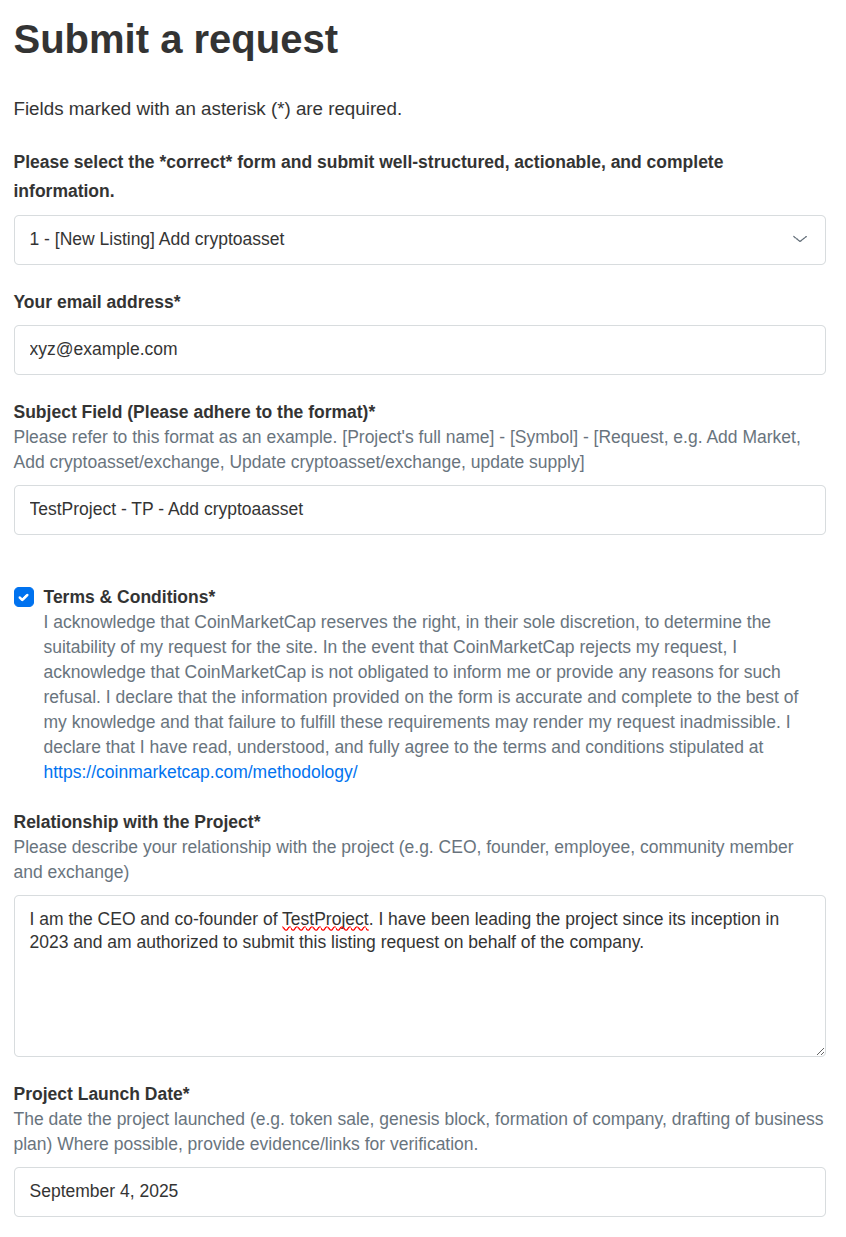
This opening section establishes your identity and authority to submit the application. Choose the correct form type, provide a professional email address, and format your subject line exactly as specified. Clearly describe your official role within the project and provide specific launch dates with supporting evidence. This section creates the first impression and validates that you're an authorized project representative rather than an unauthorized third party.
Project Definition
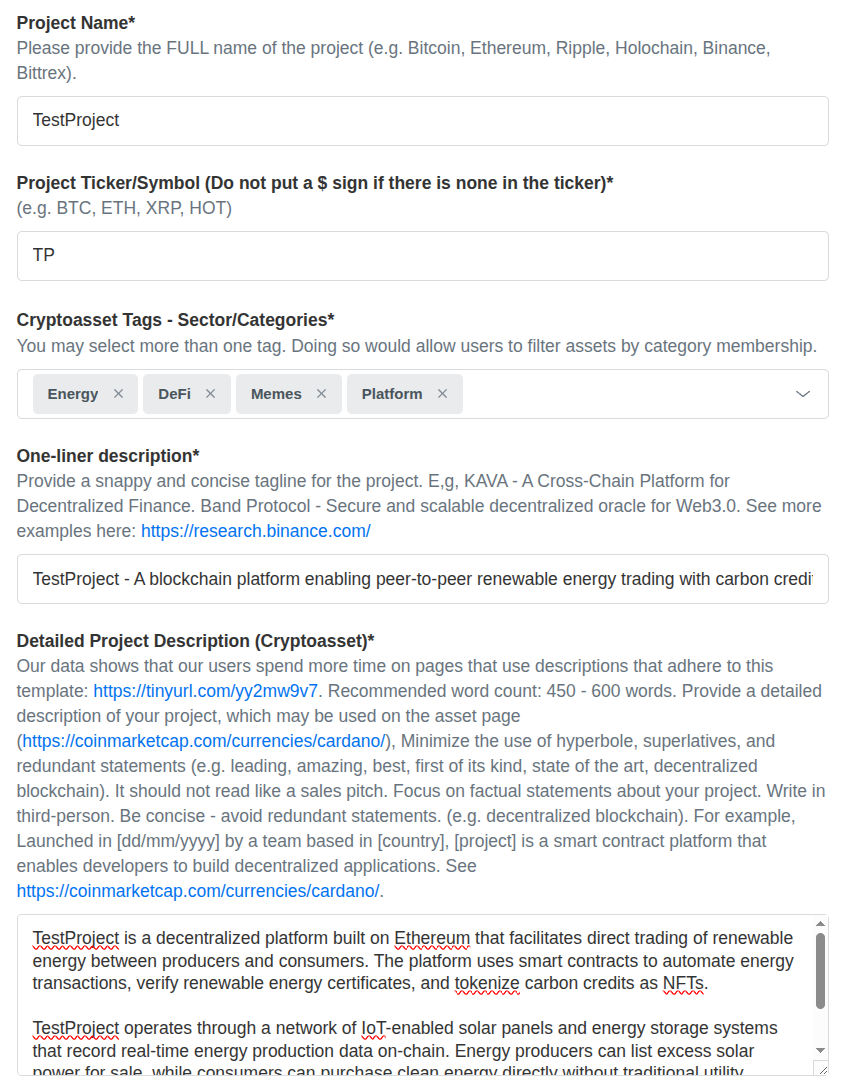
Here you define what your cryptocurrency actually does and how it should be categorized. The ticker symbol becomes your primary identifier, while category tags help users discover your project. Write descriptions factually, not promotionally - focus on concrete functionality and real-world applications rather than marketing hype. The detailed description should read like technical documentation, not a sales pitch.
Technical Infrastructure
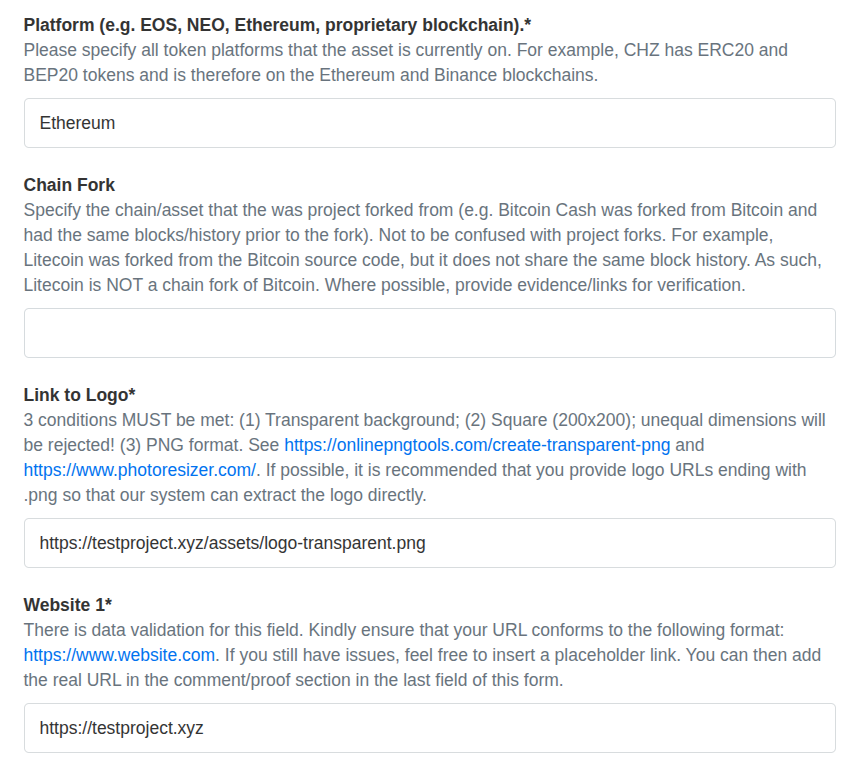
This section captures the core technical details that make your project verifiable. Your logo must meet exact specifications for proper platform display. The token contract address is critically important as it allows verification of all your claims through blockchain explorers. All URLs must be functional, and technical specifications like decimal places must match your actual smart contract implementation.
Documentation and Transparency
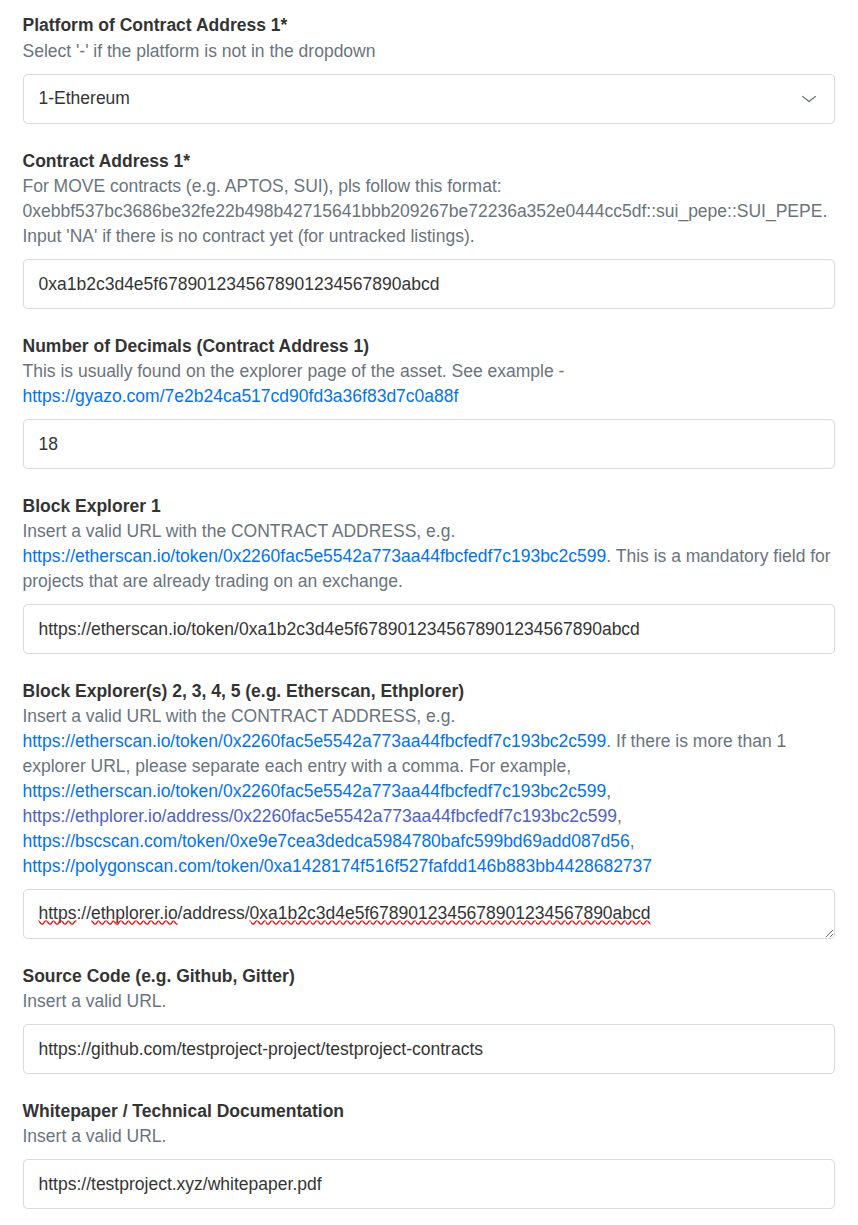
Demonstrate your project's commitment to openness through blockchain explorer links, source code repositories, and comprehensive documentation. Multiple explorer links show cross-platform accessibility, while active GitHub repositories indicate development effort. Your whitepaper should demonstrate technical depth, and announcement threads establish your project's historical community presence.
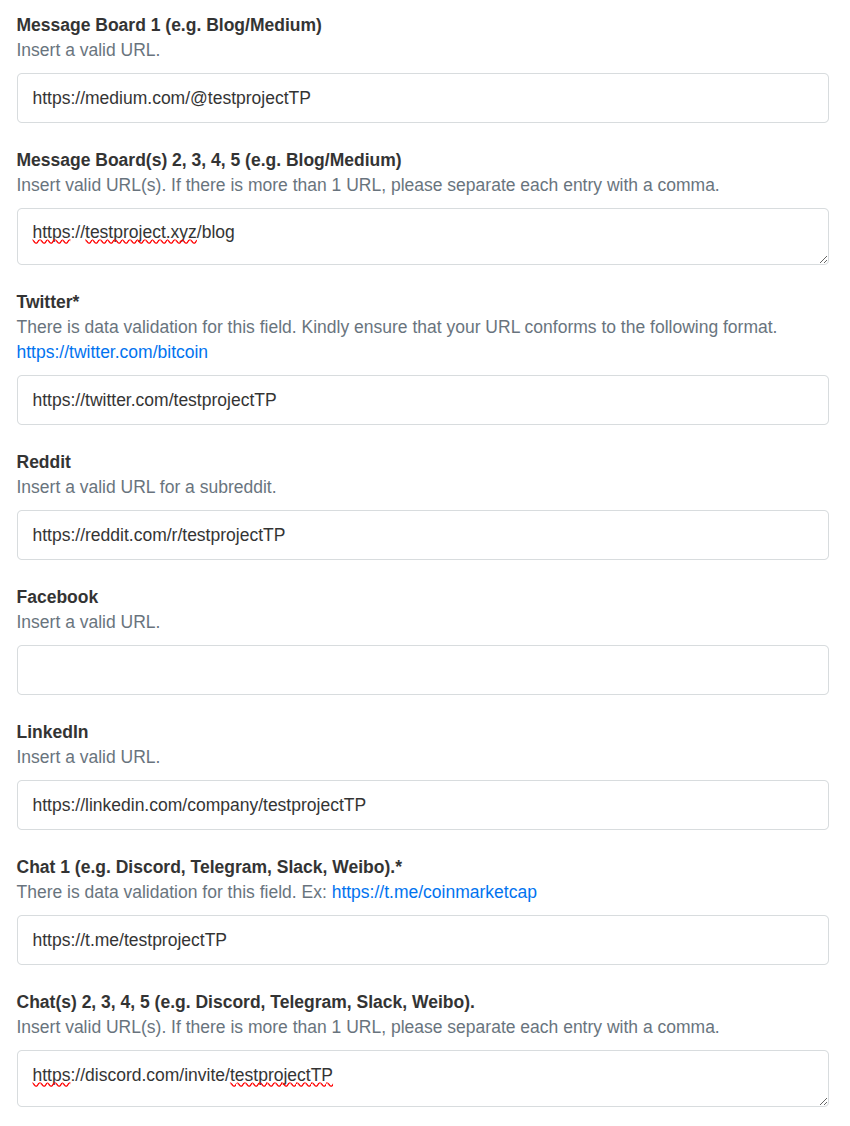
Community Presence
This section evaluates your community building across multiple platforms. Active blogs and social media accounts demonstrate ongoing engagement rather than minimal promotional activity. Communication channels like Telegram or Discord provide insight into community health - CoinMarketCap may review these to assess whether your community appears organic versus artificially inflated.
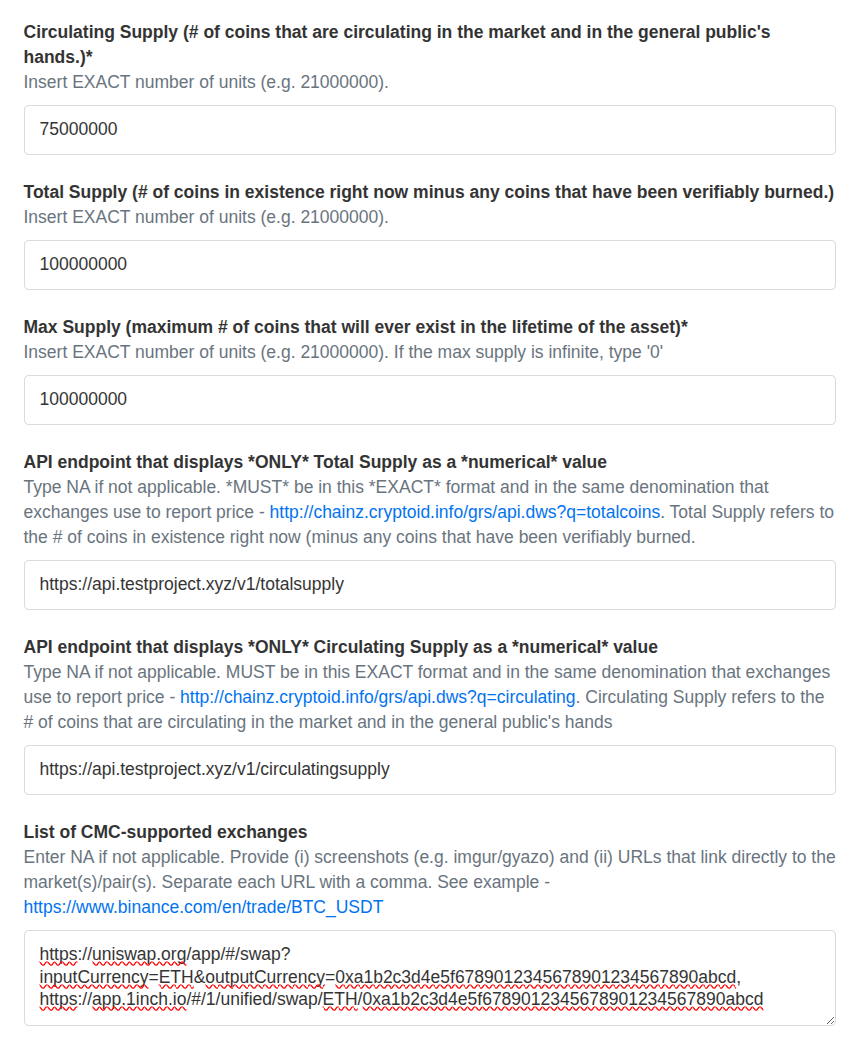
Token Economics and Market Data
Provide precise numerical data that forms the foundation of your CoinMarketCap listing. Circulating, total, and maximum supply numbers must be exact and verifiable through blockchain explorers. Optionally you can provide API endpoints that will return pure numerical values for real-time data updates. Only include functional exchange listings where users can actually trade your tokens.
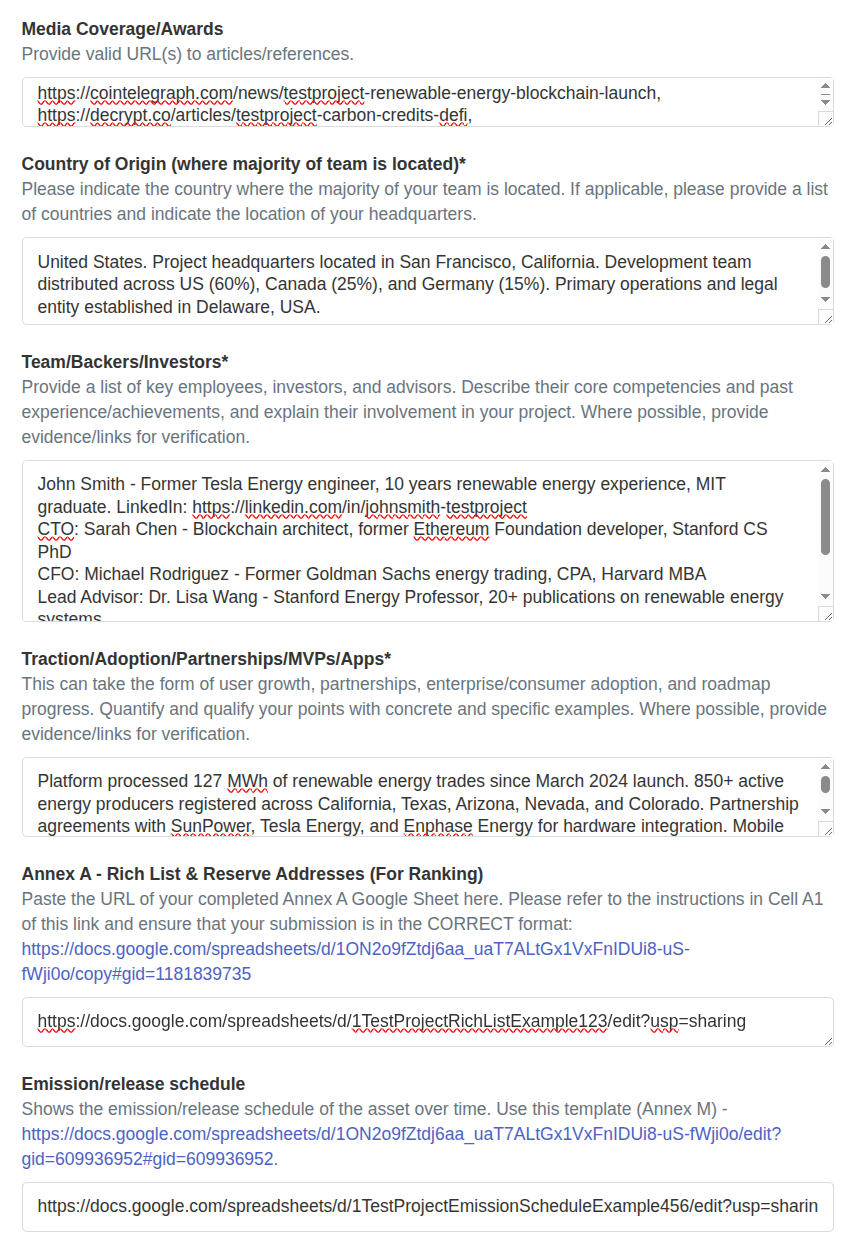
Business Credibility
Demonstrate legitimacy through media coverage from established publications, verifiable team backgrounds, and concrete traction metrics. Focus on specific, measurable achievements like user numbers, transaction volumes, or partnership agreements. Team members should have verifiable professional backgrounds and LinkedIn profiles to establish credibility and reduce anonymity concerns.
Advanced Documentation
This section requires specialized documentation including token distribution spreadsheets and emission schedules that demonstrate transparency and professional tokenomics planning. Technical specifications like consensus algorithms and ICO details provide context for your project's foundation and market history. These materials help CoinMarketCap assess potential risks and present complete project information.
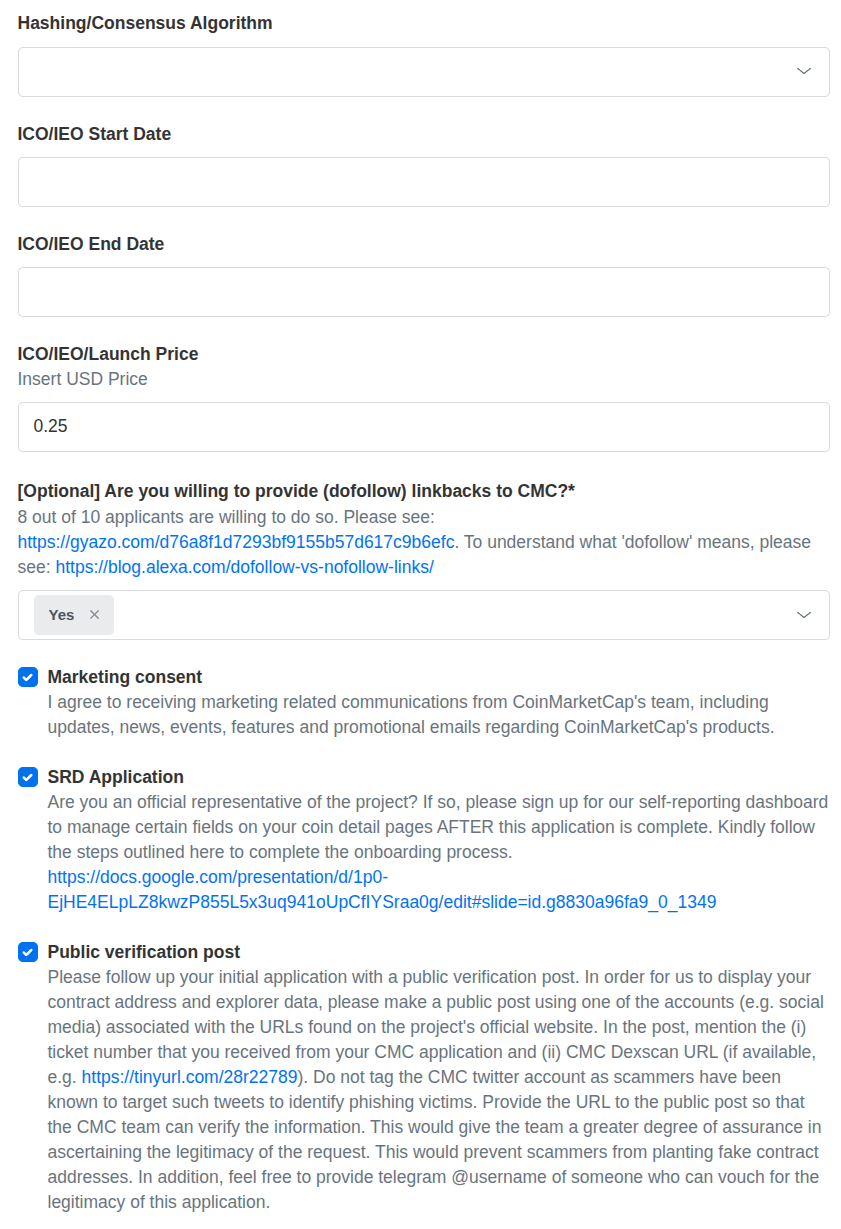
Final Commitments and Verification
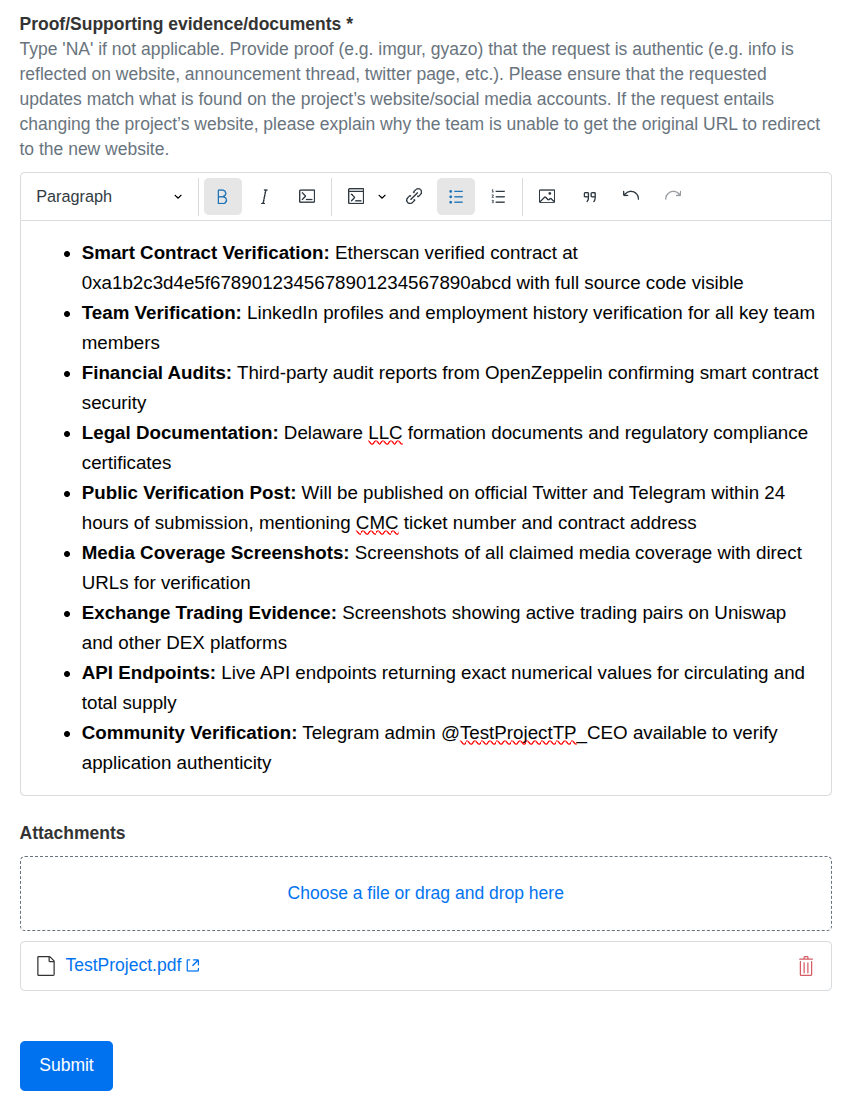
Establish your ongoing commitments to CoinMarketCap's verification processes and platform standards. This includes agreements for linkbacks, marketing cooperation, and public verification posts that prevent fraud. The evidence documentation section allows you to proactively provide comprehensive proof of your project's legitimacy, addressing potential reviewer concerns before they arise and demonstrating professional operation standards.
What Absolutely Not to Do
Never attempt to bribe CMC staff or offer incentives in exchange for listing consideration. Such attempts result in permanent blacklisting. Providing false or misleading information, including inflating user numbers or fabricating partnerships, will also derail your listing efforts.
Don't submit the form multiple times or repeatedly contact CMC for updates. Submit your complete application once and wait for the evaluation process to complete.
CMC Priority Services
For faster processing, CoinMarketCap offers CMC Priority (CMCP) services providing expedited review times and enhanced support. However, paying for priority services doesn't guarantee approval – your project still needs to meet all standard criteria.
Consider CMCP if your project has significant funding, operates in time-sensitive markets, or faces competitive pressures making timing critical.
After submitting your application and maintaining your listing
After you send your application, keep working on your project, talk with your community, and keep trading active. CMC checkers may look at your project many times during review, so steady progress matters. Answer CMC requests for more info quickly - good responses speed up the review.
The listing process usually takes a few weeks to several months, depending on how complete your application is and how complex your project is. Complete applications get reviewed faster than those needing extra information.
After getting listed, you need to keep real trading activity, project development, and community engagement going. Update your project information regularly and hit your roadmap goals - projects that don't make progress may get removed if trading volume drops a lot.
Final Thoughts
Learning how to get listed on CoinMarketCap represents a significant milestone, but view it as one step in building a successful cryptocurrency project. The preparation required – professional presentation, technical excellence, community building, and legitimate market activity – contributes to long-term success.
Focus on building genuine value and solving real problems in the cryptocurrency ecosystem. Projects prioritizing utility, community, and sustainable development are more likely to achieve successful listing and long-term marketplace success.


